Sunday, July 8, 2012

Know About All The Knowledge About Lavender Flowers

I believe that there are a lot of people love lavender flowers very much, because of their fragrance and pure color. Did you ever visit a lavender farm? It is the most beautiful place in the world. Last week I had the pleasure of doing just that-visiting a lavender farm in New Jersey. It was a wonderful and fragrant experience.

Lavender flowers and their essential oil are very versatile and can be used in many ways, the most common lavender flowers are English and French lavender. There are about 39 species all over the world, including some hybrids, of lavenders in the mint family lamiaceae.


Although the flowers tend to lose their vibrant color upon drying, they dry very well and still have their fragrance. Cut lavender make lovely bouquets and wreaths for decorating spaces. The dry buds can be used in sachets, eye pillows, teas, cookies and other baked goods. You may want to make some sweet lavender butter. Additionally, you can also purchase lavender honey and chocolate from most gourmet stores. Lavender hydrosol can be used in skin care products and to mist the face.

Lavender is noted for its relaxation properties and distinctive color. Did you know there are white, red and yellow lavender plants and that the flower of Spanish Lavender has large flowers and a dark lavender color? Grosso Lavender is the most fragrant.

Although I learned a lot about different species and varieties of lavender while studying to become a certified aroma therapists, there is still much to know; such as cooking with lavender, the uses of lavender in clinical practice, the proper distillation of lavender, the chemical properties of various lavenders. I purchased a Lavandula x intermedia Alba plant so I’m going to soon find out if I can grow it indoors. There nothing like actually seeing and smelling the plants growing outdoors!

Friday, June 1, 2012

The Dogbane Is Perfectly Adapted To The Butterfly


Dogbane
Dogbane has thin reddish stems that grow in spindly clumps up to three feet tall. When dogbane is cut, the stems ooze a thick, milky liquid.

The leaves of Apocynum cannabinumgrow opposite from one another, and sometime three or more leaves grow in from one place.

Dogbane leaves are shaped like a spear-point, and have smooth edges. On the top the leaves are smooth and waxy, underneath they have downy white hairs.

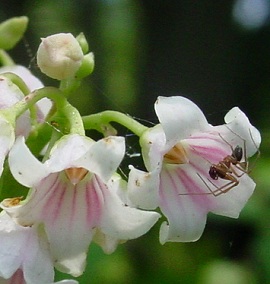
Let us watch. Bees, flies, moths, and butterflies, especially the latter, hover near. Alighting, the butterfly visitor unrolls his long tongue and inserts it where the five pink veins tell him to, for five nectar-bearing glands stand in a ring around the base of the pistil. Now, as he with-draws his slender tongue through one of the V-shaped cavities that make a circle of traps, he may count himself lucky to escape with no heavier toll imposed than pollen cemented to it. This granular dust he is required to rub off against the stigma of the next flower entered. Some bees, too, have been taken with the dogbane's pollen cemented to their tongues.

But suppose a fly call upon this innocent-looking blossom? His short tongue, as well as the butterfly's, is guided into one of the V-shaped cavities after he has sipped; but, getting wedged between the trap's horny teeth, the poor little victim is held a prisoner there until he slowly dies of starvation in sight of plenty. This is the penalty he must pay for trespassing on the butterfly's preserves!

The dogbane, which is perfectly adapted to the butterfly, and dependent upon it for help in producing fertile seed, ruthlessly destroys all poachers that are not big or strong enough to jerk away from its vise-like grasp. One often sees small flies and even moths dead and dangling by the tongue from the wicked little charmers. If the flower assimilated their dead bodies as the pitcher plant, for example, does those of its victims, the fly's fate would seem less cruel. To be killed by slow torture and dangled like a scarecrow simply for pilfering a drop of nectar is surely an execution of justice medieval in its severity.

Very small white or yellowish white flowers are in clusters on the top.

The flowers are shaped like a cup in nature.

Dogbane lives in moist areas, along rivers or creeks, and may also be found in swampy areas such as ditches or fields that are being watered.

It can be found from New England to Texas and California.

The flowers appear in late spring throughout the summer, and are pollinated by small wasps, flies and bees.

A naturally occurring cardia stimulant, called cymarin can be found in the plants roots, and is listed in a medicinal text in an early pharmacopoeia from the forties and fifties in the US.

The sap can cause the skin to blister when it is directly applied to the skin.

Friday, May 25, 2012

For Its Poisonousness The Scotch Broom Should Be Under Control


Scotch Broom
The Scotch Broom (Scoparius) is generally described as a perennial shrub. This is not native to the U.S. (United States) and has its most active growth period in the spring and summer . The Scotch Broom (Scoparius) has green foliage and inconspicuous yellow flowers, with an abuncance of conspicuous black fruits or seeds. The greatest bloom is usually observed in the spring, with fruit and seed production starting in the spring and continuing until summer. Leaves are not retained year to year. The Scotch Broom (Scoparius) has a moderate life span relative to most other plant species and a rapid growth rate. At maturity, the typical Scotch Broom (Scoparius) will reach up to 7 feet high, with a maximum height at 20 years of 7 feet.

There are several methods of controlling Scotch broom and most are suitable for agricultural situations.

Herbicides are effective but expensive and only provide short-term control. Grazing by sheep and goats can prevent further spread, but this type of control is inappropriate for conservation and forestry areas.

This species is intensely beautiful in bloom but is nearly leafless on green stems the rest of the year. The tiny leaves are borne on stiff straight sticks that make wonderful brooms. But it was a hand-held whisk broom known as a "bisom" that made the plants essential to the baker's craft. In the days of brick ovens, the cooking surface had to be swept out between bread bakings. Dry broom would ignite immediately. Green broom bisom dipped in water resisted burning long enough to do the job. Clearly a baker required a good deal of living broom growing nearby to ensure a plentiful supply. So did the whiskey shipper.

Mature Scotch broom produces a large, upright shrub. (SHNS photo by Maureen Gilmer / Do It Yourself)Today there is a great struggle to stop the steady advance of broom. Aided by runoff, animals and even insects, broom's encroachment is alarmingly rapid where conditions are right. For homeowners in these areas, broom can disfigure surrounding wild lands, resulting in a monoculture. Wild plants distributing seed into the cultivated landscapes make it a pernicious weed.

Friday, May 18, 2012

The Magnolia Flower Has Been Associated With Beauty And Perseverance


The magnolia flower
The magnolia flower has been associated with beauty and perseverance, as well as dignity and nobility. The symbolic meaning of flower species has been passed down from generation to generation and arose from fables and legends connected to the flower. Unfortunately many of the origins of these meanings have been lost over time and such is the case with the magnolia. The magnolia has also been said to symbolize sweetness and a love for nature.

Typically grown as an ornamental tree because of the attractiveness of the foliage, flowers, fruits and bark, sweetbay magnolia adds a natural beauty to the surroundings. This semi-evergreen is native to the United States and grows best in partly shaded areas with moist and acidic soil. Caring for a sweetbay magnolia tree calls for annual pruning after the flowers have faded in the summer, since the buds emerge on growth that occurred last season. Does this Spark an idea?

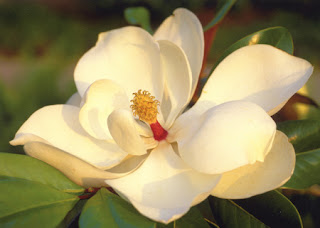
Magnolia flower The Magnolia grandiflora flower starts out as a small bud at the tip of a branch, which often becomes a meal for squirrels, who love the taste of them. It is enveloped in a brownish sheath which will fall away and reveal a blossom with as many as 14 petals. The magnolia petals will open in layers, shaped like a cup, and they are white with a yellow stamen in the center. As they age they slowly turn brown before falling away.

Despite the fact that today these blooms have become very popular all over the world, the magnolia tree flower is one of the few plants that actually originated in the United States. Their roots also extend to parts of Asia; however, their earliest distribution to other parts of the world – such as Europe – began in America. In 1688 the first live magnolia was introduced to Britain by the clergyman John Banister – who was an avid student of botany. By 1737, the growth of magnolia grandiflora was in full swing, and the well known botanical artist Georg Ehret became a magnolia enthusiast – walking three miles every morning just to study the buds blooming. As well as having a long and interesting history, the magnolia tree flower is also said to be very useful. The bark of the tree is most commonly used – generally for curing skin conditions, but also for heart and respiration ailments – however, the flowers themselves are frequently used as a rejuvenating essential oil for baths, soaps and candles; they may be pickled and eaten or dried and used as a spice, and they may also be seen as the strong floral note of many perfumes.

To some, the magnolia tree flower is considered the “symbol of the South.” To others, though, they represent perseverance, sweetness and nobility – while the magnolia tree as a whole is considered to be an emblem of dignity. As a gift, these flowers are often given to represent a struggle that has been overcome, poise in the face of adversity, or as a simple token of respect and admiration. Although these flowers may be given in classic bouquets, they may also be presented as single cut pieces, or – for the gardening fanatic – as young, potted plants that may planted into the ground at a later date.

Sunday, May 13, 2012

Calendula Has A Wide Range Of Medicinal Uses

calendula
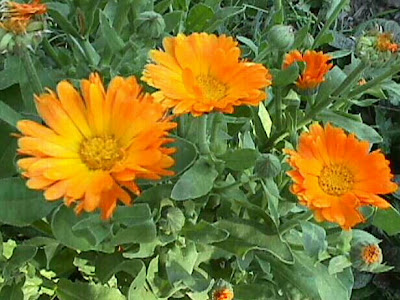
Calendula,(calendula officinalis) is both beautiful and easy to grow, Calendula should be included in any herb gardener's list of must haves. Also known as pot marigold, this is a wonderful plant for the cooler regions as it tolerates lower temperatures well. Calendula is an annual. It must be grown every year but easily reseeds so this may be taken into account when planning a garden. I find calendula does the best when I let a few plants go to seed and reseed the area themselves vs planting individual plants every year. This does increase the chances of strays getting out of the area you wanted calendula to grow but these are easily pulled up if necessary.

Flavonoids, found in high amounts in calendula, are thought to account for much of its anti-inflammatory activity. Other potentially important constituents include the triterpene saponins andcarotenoids.

Investigations into anticancer and antiviral actions of calendula are continuing. At this time, insufficient evidence exists to recommend the use of calendula for cancer. Nevertheless, test tube studies have found antiviral activity for calendula. The constituents responsible for these actions are not clear, however, and the relevance of these actions for human health care has not been established.

How to Use It

A tea of calendula can be made by pouring 1 cup (250 ml) of boiling water over 1–2 teaspoons (5–10 grams) of the flowers; the tea is then steeped, covered for ten to fifteen minutes, strained, and drunk. At least 3 cups of tea are recommended per day. Tincture is similarly used three times a day, at 1/4–1/2 teaspoon (1–2 ml) each time. The tincture can be taken in water or tea. In addition, prepared ointments can be used topically for skin problems, although wet dressings made by dipping a cloth into the cooled tea are also effective. Topical treatment for eye conditions is not recommended, as absolute sterility must be maintained.

Calendula has been used for medicinal purposes since the 12th century. It was used historically to treat upset stomachs, ulcers and menstrual cramps, although no clinical evidence has proven its effectiveness for these conditions. It was also used to relieve fevers and treat cancer. The flowers have also been used as a pesticide. This plant is not taken orally for any conditions, except in homeopathic preparations, in which it is extremely diluted.

Chronic Migraine Signs You Know It's Not Just a Migraine. Learn Causes of Chronic Migraine. www.MyChronicMigraine.com

Ear infections, or otitis media, can be painful for children; by the age of seven, 93 percent of children have experienced at least one ear infection, according to a 2003 article written by Sarrell, Cohen and Kahan in the "Journal of Family Practice." The University of Maryland states that ear drops that contain calendula may be used to help treat pain related to ear infections in children. Sarrell et al write that the main goal for treating otitis media if there is no systemic infection is to alleviate pain. Calendula may be an effective treatment for some children.

Calendula has a wide range of medicinal uses. It is a soothing tea for gastrointestinal problems, healing wash for skin wounds, easily infused into oil for a healing salve or balm. Great for baby diaper area.

Calendula also has the rare quality of keeping its color during soapmaking. Unlike most herbal additives, calendula will not turn brown or black in a bar of herbal soap. Add 1 tablespoon of petals to just enough oil to cover. After your soap reaches trace, stir in the oil and petal mixture throughout your soap batch. The bright orange petals will remain bright and offer even soothing properties to the finished soap. For soapmaking information, find someone knowledgeable in the craft before undertaking it yourself.

Radiation-Induced Dermatitis

Radiation therapy for cancer can cause dermatitis, which is inflammation of the skin that may be accompanied by a rash or itching. A 2009 meta-analysis published in the "Journal of Otolaryngology-Head and Neck Surgery" found that application of topical calendula prevented dermatitis caused by radiation. If you are receiving radiation, ask your oncologist or treatment team if calendula is safe for you to use.

Skin Injuries

Burns, cuts and bruises may be treated with calendula preparations. Tinctures, ointments and washes made with calendula have been used to encourage wound healing, ease bruising and also treat infections associated with wounds. Though the exact mechanism of action is not clear, it is thought that calendula helps blood circulation and encourages collagen production to heal the skin.